
Tooth Extractions – Beachwood, OH
Protect Your Smile By Removing Damaged Teeth
Under normal circumstances, you can count on our dedicated team to provide services that help prevent oral issues or treat areas of concern, such as cavities or gum disease, as they arise. However, if your tooth is more severely injured, diseased, or decayed, it could put your dental health at risk.
If our team determines that no other procedure will effectively address the root problem, we can protect your smile by removing damaged teeth. Continue reading to learn more about what to expect from tooth extractions and when they might be required!
Why Choose Orange Place Family Dentistry for Tooth Extractions?
- Offer Two Types of Dental Sedation
- Trusted Members of the American Dental Association
- Advanced Technology for Enhanced Patient Comfort
Reasons Why Tooth Extractions Are Necessary

We understand that some patients feel nervous about having a problematic tooth removed, but there are some circumstances in which an extraction is the best way to preserve your smile, such as:
- You suffered decay or damage that cannot be treated with other services, such as tooth-colored fillings, a root canal, or a dental crown.
- To allow a restoration, such as dentures, to fit correctly and function as intended.
- To make space in your arch for orthodontics to successfully straighten your grin.
- You developed an infection or abscess in or around the affected tooth.
Our team is happy to discuss the reasons for our recommendation and answer as many questions as necessary to help you feel confident moving forward.
The Process of Removing a Tooth
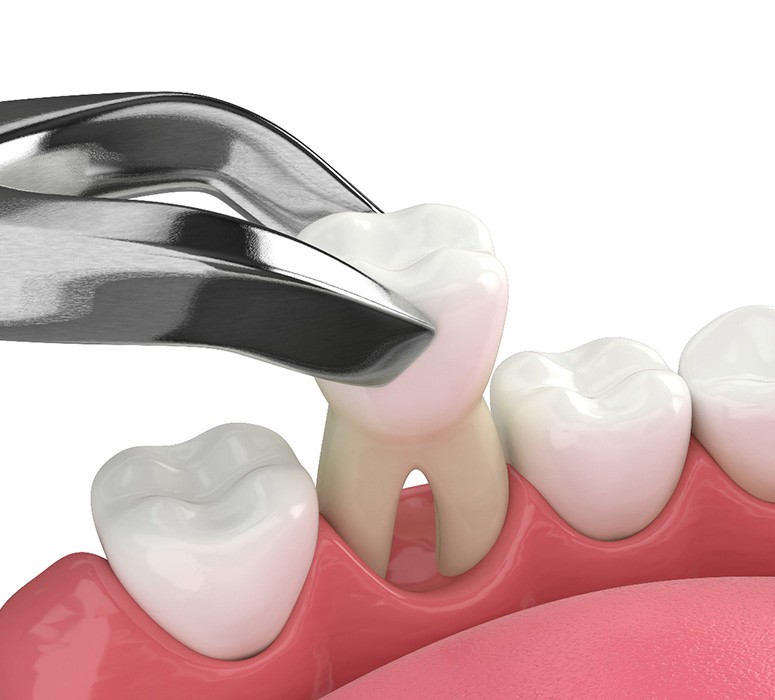
If you’re scared that having your tooth extracted will hurt, you can set your mind at ease. Our compassionate providers offer two types of dental sedation that can help you feel calm and relaxed throughout your procedure. Plus, we will begin by placing a local anesthetic to numb the area, so you might feel pressure while we work, but not outright pain.
Then, we’ll use a special instrument called an elevator to help lift your tooth from the socket. Next, we use forceps to grasp it gently and wiggle it free from its socket. Molars are larger and contain more roots, so they may need to be broken into smaller pieces before extraction to avoid harming your jawbone.
We might also suggest appropriate replacement options, such as dentures, a dental bridge, or a dental implant, based on your unique needs. We typically recommend restoring your smile sooner rather than later to avoid potential negative effects from tooth loss, such as dental drifting.
Tooth Extraction Aftercare

It’s normal to feel swollen and sore for a few days following your extraction, and you must take care of yourself properly to avoid possible complications. For instance, your mouth must form a blood clot at the site to protect the recently exposed tissues and nerves to prevent dry socket, which can be incredibly uncomfortable.
Your instructions might vary somewhat based on your circumstances, but they typically include:
- Take any prescribed medications as directed.
- Rinse your mouth with salt water in the first 24 hours, then resume brushing and flossing as usual after the first day.
- Avoid using tobacco products, which suppress your immune system and increase the likelihood of developing an infection.
- Drink plenty of water, but not from a straw because the force of suction might dislodge the blood clot.
- Get plenty of rest and steer clear of activities that elevate your heart rate or blood pressure.
- Prop your head up on pillows when you sleep.