
Dental Bridges – Beachwood, OH
Rebuild Your Gorgeous Smile
Tooth loss is a common oral health problem that can lead to serious consequences like dental drift, accelerated tooth decay, indigestion, malnutrition, and further tooth loss. Fortunately, a dental bridge from Orange Place Family Dentistry can replace one or several sequential missing teeth with beautiful restorations. Here’s a quick look at how dental bridges work, how they are placed, and who they can help from the experienced team at our dental office in Beachwood.
Why Choose Orange Place Family Dentistry for Dental Bridges?
- Skilled and Experienced Team of Dentists
- Restore Your Smile and Chewing Power
- Dental Insurance Welcomed
What Is a Dental Bridge?
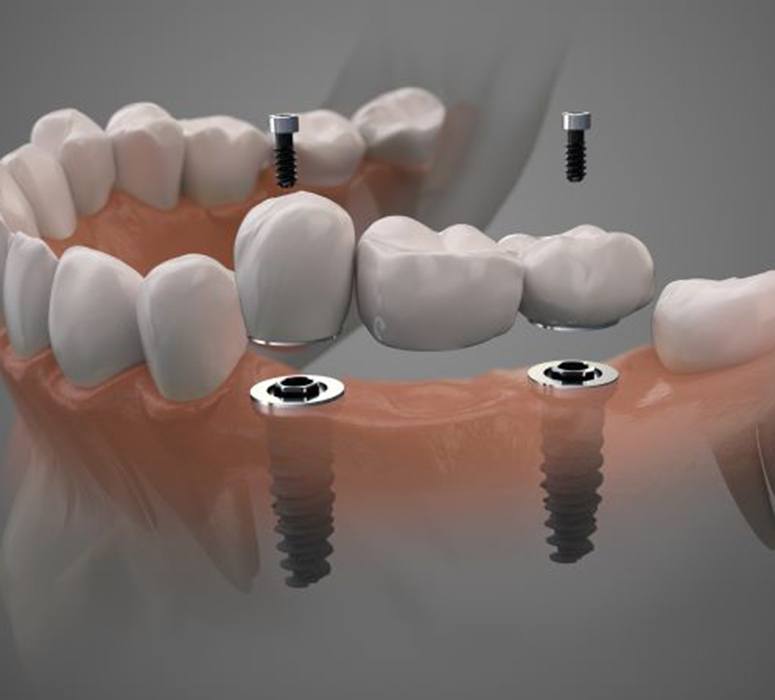
A dental bridge is a string of one or more artificial teeth supported by two crowns or dental implants placed on either side of the gap created by tooth loss. These devices are used to address the loss of one or more teeth, and they are usually best for patients who have lost one to four teeth in a row. However, you’ll need to be free from oral infections like cavities and gum disease to receive a traditional bridge, and you’ll also need to have jawbones sturdy enough to support implants if you wish to get an implant bridge. Bridges can be made from metal or ceramics to ensure that they are beautiful and functional.
Types of Dental Bridges

The first step to understanding the best way to replace your lost teeth is to have a consultation at our office in Beachwood. After a thorough examination, our dentist may recommend a restoration like:
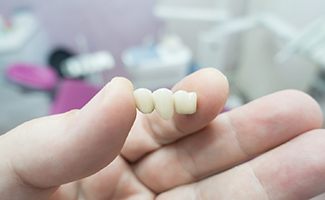
Traditional Dental Bridge
Traditional dental bridges are one or two artificial teeth strung between two dental crowns. These devices can be an affordable way to replace lost teeth, but they require the healthy teeth on either side of the gap created by tooth loss to be permanently altered so they can be placed.
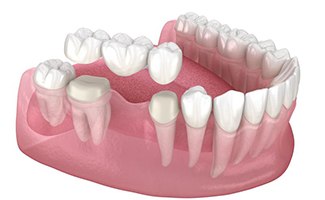
Implant Bridge
Implant bridges are two or more artificial teeth supported by titanium pieces surgically inserted into the jawbone. These devices can exert superior chewing power and last much longer than traditional restorations, but they are also more costly.
The Benefits of Getting a Dental Bridge

The American Dental Association recommends replacing lost teeth as soon as possible to prevent issues like uneven enamel erosion, dental drift, and further tooth loss. A dental bridge may be able to improve your life in ways like:
- Bracing the remaining teeth to help prevent them from shifting out of place.
- Enhancing your confidence in your grin.
- Improving your ability to speak clearly and chew thoroughly.
- Supporting your remaining natural teeth during the chewing process.
If you’d like to know more about how a dental bridge may be able to help you, contact our office to schedule a consultation.
Dental Bridges FAQs
Can you take a dental bridge out?
Although you may have heard partial dentures referred to as a “removable bridges,” a true dental bridge is not removable. These prosthetics were specifically designed to stay in your mouth for years to come once placed.
If your dental bridge in Beachwood becomes damaged, or if the abutment teeth it attaches to develop cavities or infections, you may need to have it temporarily removed, but this will need to be done by your dentist.
Eventually, you will need to replace your bridge due to normal wear and tear (typically in about five to 15 years). Your dentist will remove it at this time to take new impressions of your mouth and then replace it once your new restoration has arrived from the dental lab.
What will my dental bridge be made of?
At Orange Place Family Dentistry, we typically use porcelain dental bridges in Beachwood to replace our patients’ missing teeth. This is because they not only look and feel natural, but they are strong enough to withstand the daily force of consuming a healthy diet.
Bridges that are made from metals like gold or other alloys are also very strong and durable, but they are much more obvious than porcelain and are used much less often nowadays.
Is it painful to get a dental bridge?
It’s normal for patients to be a little nervous when they hear they need a dental bridge, mostly because they’re afraid the procedure will hurt. The good news is that before beginning any work, your dentist will numb your teeth and ensure you’re completely comfortable. In most cases, you should only need a topical anesthetic, but for more severe anxiety, we are pleased to offer sedation dentistry options. If you’d like to learn more about them, please let us know before your appointment.
Once your teeth are prepped for your dental bridge placement, they might feel a little sensitive for a few days; however, this is usually very mild and can be easily alleviated with OTC pain relievers like ibuprofen or acetaminophen. If you have tried these options and are still in pain, give us a call for further guidance.
Dental bridges in Beachwood were designed to prevent your remaining healthy teeth from drifting out of place, which in theory should stop further discomfort from occurring later on.
If you’re visiting us for a dental implant bridge, some soreness following your surgery is completely normal, and should subside within two weeks. To keep it to a minimum and avoid painful conditions like dry socket or infection, be sure to abide as closely as possible with your aftercare instructions.
How long will my dental bridge last?
Although it will vary from person to person, you can expect your dental bridge in Beachwood to last anywhere between five and 15 years.
You can ensure your dental bridge stays in great condition for as long as possible by maintaining excellent oral hygiene including brushing twice a day, flossing daily, and visiting Orange Place Family Dentistry every six months for your regular dental checkups and cleanings. You should also avoid dangerous oral habits like smoking, vaping, or using tobacco products.
Furthermore, be sure not to use your bridge to bite fingernails, crunch ice cubes, or chew pen caps. If you grind your teeth (bruxism), talk to your dentist about having a custom nightguard made to protect your smile.
Bridges located in the front of the mouth typically last a bit longer than those in the back because they aren’t used for chewing, which will inevitably wear them down.
If you have a dental implant bridge, it will likely last longer than a traditional bridge, because it has the added benefit of providing stronger biteforce. You may still need to replace the bridge itself eventually, but with a proper hygiene routine, your dental implants have the potential to last a lifetime.